J
Jake Morrison
Guest
- Thread Author
- #1
Organic pest control for container vegetables works without harsh sprays. Here’s my bug-by-bug plan for organic vegetable gardening in pots.
I grow tomatoes, peppers, and kale on a south-facing balcony in zone 6b, and I’ve lost plants to nearly every pest in this guide. Below is what actually worked, including one spray mistake that cost me a third of a tomato plant.
A pot is a tiny island with no predators. When aphids land on a container tomato, there’s no ladybug traffic to stop them, and the infestation can explode within a week or two.
That’s why container pest control moves faster than in-ground gardening. Plants on a balcony vegetable garden sit close together, so bugs can jump from pot to pot in a day.
You’ll also eat these plants within hours of treating them. Organic methods keep the harvest safe and are gentler on the pollinators visiting your flowers.
Spend two minutes each morning checking your plants before the day heats up. Catching bugs on day one beats fighting them on day ten.
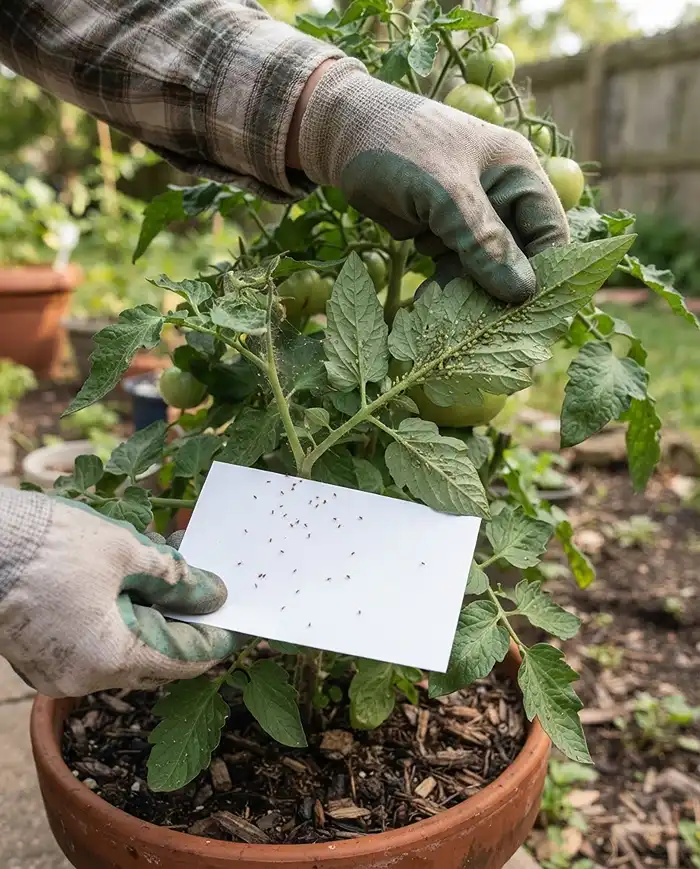
Aphids cluster on new growth in green, black, or gray clumps. Spider mites are barely visible, but silky webbing between leaf and stem gives them away. Whiteflies flutter up like dust when you brush a plant.
Last July, my ‘Sun Gold’ cherry tomatoes started yellowing from the bottom up. The white-paper test showed moving red specks, which meant spider mites. I caught them early enough that two soap sprays cleared them.
Hornworms grow up to 4 inches long, green with white diagonal stripes, and vanish against tomato stems. Cabbage loopers are pale green, about an inch long, and arch their backs as they crawl across kale and broccoli.
Frass is your best clue. Hornworm droppings look like dark green-black pellets about the size of pencil lead. Check at dusk with a blacklight flashlight, because hornworms glow under it.
Fungus gnat larvae live in the top 2 inches of soil and nibble fine roots. Root maggots, mostly on cabbage, radish, and onion, tunnel into roots. If a plant wilts at midday despite moist soil, slide it out and inspect the roots.
Soggy soil also invites mold, which I cover in this guide to avoiding mold when growing microgreens.
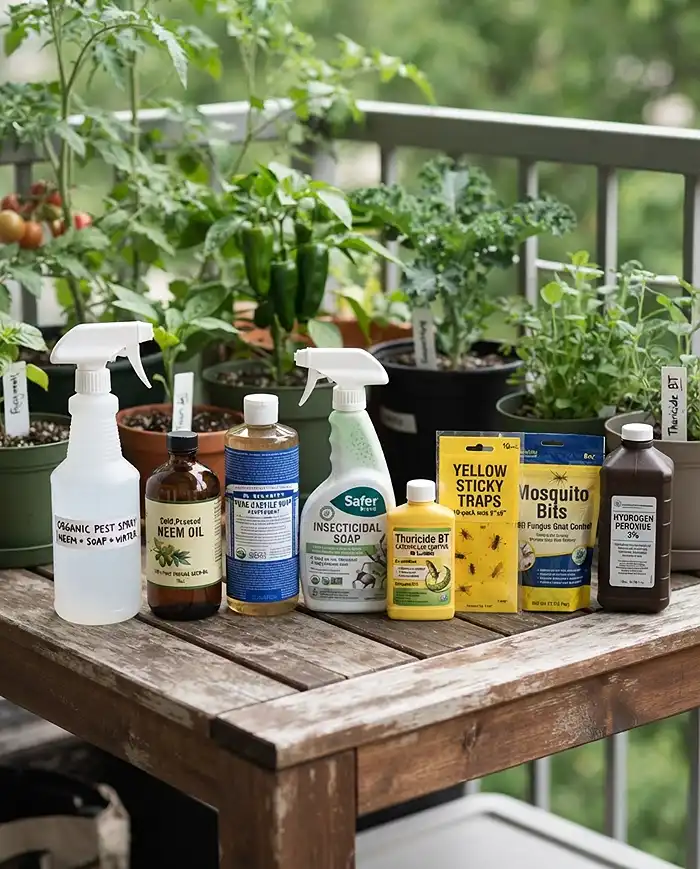
You don’t need a garage full of products. This kit costs roughly $60 to $80 in 2026 US prices and handles nearly every pest above.
When buying sprays, look for the OMRI Listed seal from the Organic Materials Review Institute, which confirms a product is allowed in organic production.
Pro Tip: Bt works only when caterpillars eat it, so spray in the evening and expect them to stop feeding within a day or two.
Yellow sticky traps are monitoring tools, not a cure. Clip one near every two or three pots at canopy height. A sudden jump in trapped whiteflies or gnats tells you to inspect and treat before numbers climb.
Floating row cover blocks moths and beetles from laying eggs. Drape it over hoops on kale, broccoli, and radishes, and weigh down the edges. Remove it from tomatoes, peppers, and squash once flowers open, since those crops need pollinators.
Work through these steps in order, escalating only if the bugs persist. Most infestations I’ve caught early ended at Step 1 or 2, and the plant never skipped a beat.
Use a gentle but firm spray in the morning so leaves dry by evening. Hit the undersides of leaves first. Drop hand-picked hornworms into a cup of soapy water.
Prune any heavily infested leaves and seal them in a bag. Don’t compost them, since eggs can survive.
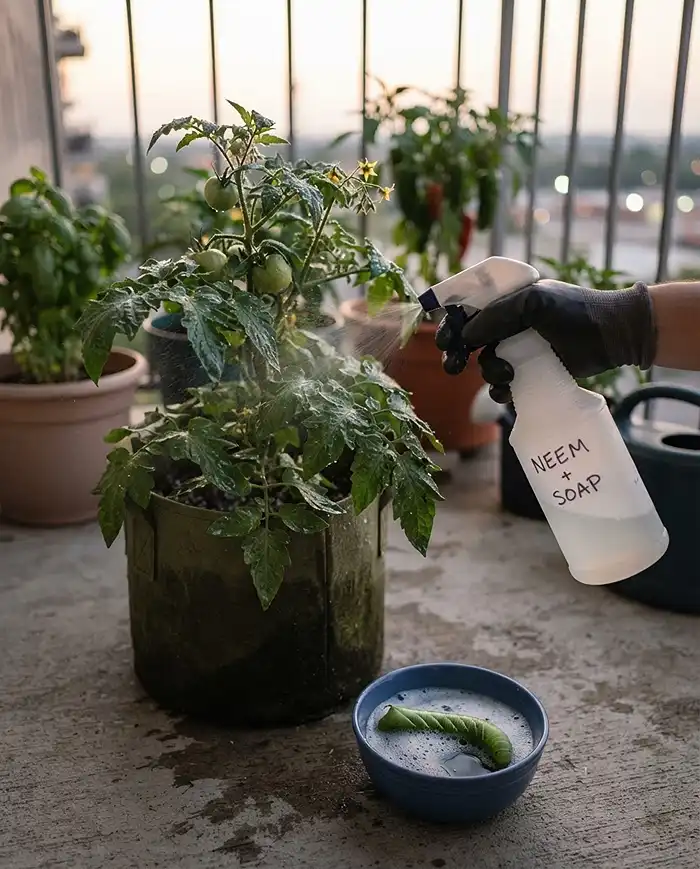
Mix insecticidal soap at about 1 teaspoon of castile soap per quart of water. For neem, combine 1 teaspoon of neem oil and 1/2 teaspoon of castile soap per quart, which keeps the oil from separating.
Test on one leaf and wait 24 hours before spraying the whole plant. Apply in the evening and coat the undersides until the liquid just drips. Shake the bottle often, because neem separates quickly.
Repeat every 5 to 7 days for three weeks. For caterpillars, mix Bt per the label and spray the foliage at dusk.
Soil pests need a drench, not a spray. Mix 3% hydrogen peroxide with water at 1 part to 4 parts, then water the pot until it drains. It fizzes on contact and kills larvae in the top few inches.
Mosquito Bits contain BTI, a bacterium that targets gnat larvae and is harmless to plants and people. I steep about a tablespoon in a gallon of water for 30 minutes, then water with it. Check your product’s label for exact rates.
Prevention is mostly habit. Check plants daily, wipe down tools between pots, and remove fallen leaves and spent flowers weekly. Pests thrive on neglected corners, so keep the whole space clean and airy.
Companion plants work as one layer of defense, not a force field. Tuck 2 or 3 chives or a garlic clove around the edge of a 15-gallon tomato pot. Add a ‘Tangerine Gem’ marigold to ease aphid and whitefly pressure.
Gardeners also report fewer hornworms near marigolds and basil, though research is mixed. I treat them as a bonus. A nasturtium in a separate pot can lure aphids away from your vegetables.
I learned this the hard way. In March, I watered a kale pot on a rigid schedule, and gnats swarmed within two weeks. The fix was simply sticking a finger in the soil first.
Overwatering is among the most common container gardening mistakes. Pruning the bottom 12 inches of an indeterminate tomato also helps.
Even good organic treatments backfire when applied wrong. These are the two issues I hear about most, and both are easy to fix once you know the cause.
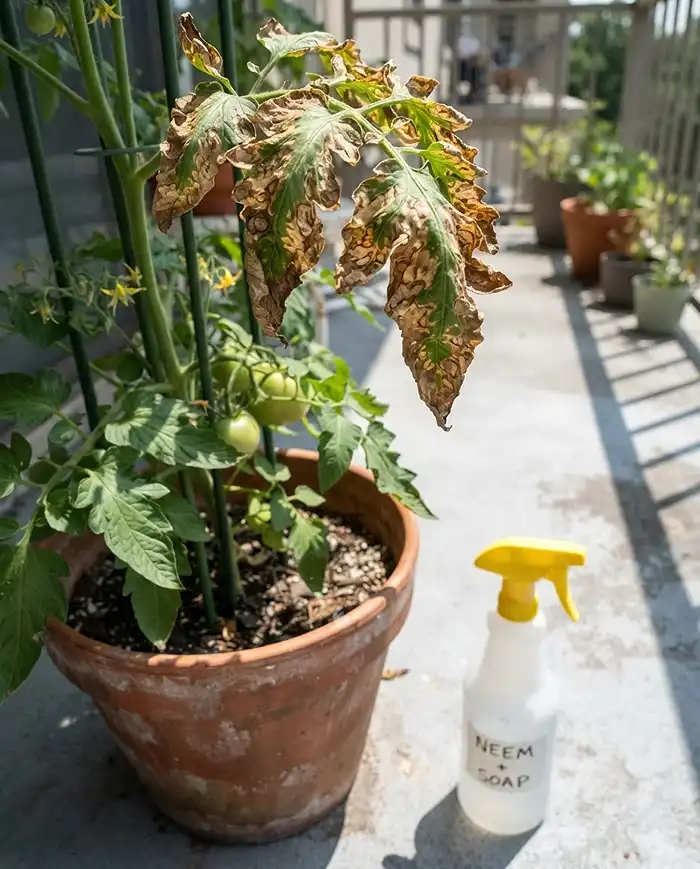
I once sprayed my ‘Early Girl’ at 1 p.m. in 88°F July sun. By morning, bronze, crispy patches covered roughly a third of the leaves. The plant recovered, but I lost two weeks of growth.
Organic sprays break down quickly and don’t leave lasting protection. They also don’t touch eggs, so a new batch hatches days later. Reapply every 5 to 7 days for about three weeks to break the life cycle.
Skipping follow-ups is one of the most common gardening mistakes. Mark your calendar after the first spray so you don’t forget round two.
Organic sprays are generally safe, but every product has a pre-harvest interval, the minimum wait between spraying and picking. Labels vary, so check yours. I stop neem about 3 days before harvest and always wash produce thoroughly before eating.
It can. Dish detergents with degreasers or bleach strip the protective wax from leaves and cause burning. Pure castile soap, at about 1 teaspoon per quart of water, is the only DIY soap I trust on vegetables. Test one leaf first.
Solarize old potting soil by sealing it in a black plastic bag and leaving it in hot, direct sun for about two weeks. The heat kills overwintering eggs and pathogens. This works best in warm summer weather, not cool spring days.
I grow tomatoes, peppers, and kale on a south-facing balcony in zone 6b, and I’ve lost plants to nearly every pest in this guide. Below is what actually worked, including one spray mistake that cost me a third of a tomato plant.
Table of Contents
- Why Organic Pest Control for Container Vegetables Matters
- Inspecting and Identifying Common Container Pests
- Essential Organic Pest Control Supplies
- Step-by-Step Guide to Eradicating Pests Organically
- Proactive Prevention: Stopping Bugs Before They Arrive
- Common Problems & Solutions
- Frequently Asked Questions
- Key Takeaways
Why Organic Pest Control for Container Vegetables Matters
A pot is a tiny island with no predators. When aphids land on a container tomato, there’s no ladybug traffic to stop them, and the infestation can explode within a week or two.
That’s why container pest control moves faster than in-ground gardening. Plants on a balcony vegetable garden sit close together, so bugs can jump from pot to pot in a day.
You’ll also eat these plants within hours of treating them. Organic methods keep the harvest safe and are gentler on the pollinators visiting your flowers.
Inspecting and Identifying Common Container Pests
Spend two minutes each morning checking your plants before the day heats up. Catching bugs on day one beats fighting them on day ten.
- Flip three or four leaves per plant and check the undersides.
- Scan stem joints and new growth for clusters, webbing, or sticky residue.
- Look at the soil surface for dark pellets, tiny flies, or chewed seedlings.
- Tap a leaf over white paper to reveal specks that move.
Aphids, Spider Mites, and Whiteflies (The Sap-Suckers)
Quick Answer: Aphids, spider mites, and whiteflies are tiny insects that suck sap from leaf undersides. Look for sticky honeydew, fine webbing, or a cloud of white flies when you shake a stem. Left alone, they cause yellowing and stunted growth.
Aphids cluster on new growth in green, black, or gray clumps. Spider mites are barely visible, but silky webbing between leaf and stem gives them away. Whiteflies flutter up like dust when you brush a plant.
Last July, my ‘Sun Gold’ cherry tomatoes started yellowing from the bottom up. The white-paper test showed moving red specks, which meant spider mites. I caught them early enough that two soap sprays cleared them.
Tomato Hornworms and Cabbage Loopers (The Leaf-Chewers)
Quick Answer: Tomato hornworms and cabbage loopers are caterpillars that chew large holes in leaves. Find them by looking for dark, pellet-like frass (droppings) on the soil or lower leaves, then check the stems above it.
Hornworms grow up to 4 inches long, green with white diagonal stripes, and vanish against tomato stems. Cabbage loopers are pale green, about an inch long, and arch their backs as they crawl across kale and broccoli.
Frass is your best clue. Hornworm droppings look like dark green-black pellets about the size of pencil lead. Check at dusk with a blacklight flashlight, because hornworms glow under it.
Fungus Gnats and Root Maggots (The Soil Dwellers)
Quick Answer: Fungus gnats and root maggots breed in constantly damp potting soil. Adults are small flies hovering near the pot, while the larvae feed on roots underground, causing wilting in plants that otherwise look healthy.
Fungus gnat larvae live in the top 2 inches of soil and nibble fine roots. Root maggots, mostly on cabbage, radish, and onion, tunnel into roots. If a plant wilts at midday despite moist soil, slide it out and inspect the roots.
Soggy soil also invites mold, which I cover in this guide to avoiding mold when growing microgreens.
Essential Organic Pest Control Supplies
You don’t need a garage full of products. This kit costs roughly $60 to $80 in 2026 US prices and handles nearly every pest above.
- A 1-quart spray bottle you use only for pest sprays
- Cold-pressed neem oil and pure castile soap
- Ready-to-use insecticidal soap
- Bt kurstaki (Bacillus thuringiensis) concentrate
- Yellow sticky traps, Mosquito Bits (BTI), and 3% hydrogen peroxide
- Lightweight floating row cover with small hoops
When buying sprays, look for the OMRI Listed seal from the Organic Materials Review Institute, which confirms a product is allowed in organic production.
Neem Oil, Insecticidal Soap, and Bt (Bacillus thuringiensis)
Quick Answer: Neem oil deters feeding and disrupts insect growth over several days. Insecticidal soap kills soft-bodied bugs on contact. Bt is a bacterium that kills only caterpillars after they eat treated leaves. Each targets a different problem.
| Treatment | Best For | Watch Out For |
|---|---|---|
| Neem oil | Aphids, mites, whiteflies; slow, lasting pressure | Burns leaves in sun; not an instant kill |
| Insecticidal soap | Fast contact kill of soft-bodied bugs | Only works if it hits the bug; no residue |
| Bt kurstaki | Hornworms and cabbage loopers | Useless on other pests; breaks down in sunlight |
Pro Tip: Bt works only when caterpillars eat it, so spray in the evening and expect them to stop feeding within a day or two.
Yellow Sticky Traps and Floating Row Covers
Yellow sticky traps are monitoring tools, not a cure. Clip one near every two or three pots at canopy height. A sudden jump in trapped whiteflies or gnats tells you to inspect and treat before numbers climb.
Floating row cover blocks moths and beetles from laying eggs. Drape it over hoops on kale, broccoli, and radishes, and weigh down the edges. Remove it from tomatoes, peppers, and squash once flowers open, since those crops need pollinators.
Step-by-Step Guide to Eradicating Pests Organically
Work through these steps in order, escalating only if the bugs persist. Most infestations I’ve caught early ended at Step 1 or 2, and the plant never skipped a beat.
Step 1: Isolation and Mechanical Removal
Quick Answer: Move the infested pot at least 6 feet from healthy plants, then physically remove the bulk of the pests. A hose blast knocks off aphids and mites, and hand-picking handles caterpillars. This alone often cuts an infestation by half.
Use a gentle but firm spray in the morning so leaves dry by evening. Hit the undersides of leaves first. Drop hand-picked hornworms into a cup of soapy water.
Prune any heavily infested leaves and seal them in a bag. Don’t compost them, since eggs can survive.
Step 2: Applying Natural Sprays Correctly
Mix insecticidal soap at about 1 teaspoon of castile soap per quart of water. For neem, combine 1 teaspoon of neem oil and 1/2 teaspoon of castile soap per quart, which keeps the oil from separating.
Test on one leaf and wait 24 hours before spraying the whole plant. Apply in the evening and coat the undersides until the liquid just drips. Shake the bottle often, because neem separates quickly.
Repeat every 5 to 7 days for three weeks. For caterpillars, mix Bt per the label and spray the foliage at dusk.
Step 3: Treating the Potting Soil for Larvae
Soil pests need a drench, not a spray. Mix 3% hydrogen peroxide with water at 1 part to 4 parts, then water the pot until it drains. It fizzes on contact and kills larvae in the top few inches.
Mosquito Bits contain BTI, a bacterium that targets gnat larvae and is harmless to plants and people. I steep about a tablespoon in a gallon of water for 30 minutes, then water with it. Check your product’s label for exact rates.
Proactive Prevention: Stopping Bugs Before They Arrive
Prevention is mostly habit. Check plants daily, wipe down tools between pots, and remove fallen leaves and spent flowers weekly. Pests thrive on neglected corners, so keep the whole space clean and airy.
Companion Planting in Pots (Marigolds and Alliums)
Companion plants work as one layer of defense, not a force field. Tuck 2 or 3 chives or a garlic clove around the edge of a 15-gallon tomato pot. Add a ‘Tangerine Gem’ marigold to ease aphid and whitefly pressure.
Gardeners also report fewer hornworms near marigolds and basil, though research is mixed. I treat them as a bonus. A nasturtium in a separate pot can lure aphids away from your vegetables.
Proper Watering and Pruning to Improve Airflow
Quick Answer: Let the top inch of potting mix dry out between waterings to prevent fungus gnats. Prune the lowest leaves, especially those touching soil, to improve airflow and remove the humid microclimate where pests breed.
I learned this the hard way. In March, I watered a kale pot on a rigid schedule, and gnats swarmed within two weeks. The fix was simply sticking a finger in the soil first.
Overwatering is among the most common container gardening mistakes. Pruning the bottom 12 inches of an indeterminate tomato also helps.
Common Problems & Solutions
Even good organic treatments backfire when applied wrong. These are the two issues I hear about most, and both are easy to fix once you know the cause.
Neem Oil Burning Vegetable Leaves (Phototoxicity)
Quick Answer: Oil-based sprays like neem can burn leaves when applied in direct sun, because droplets magnify light and heat. Spray only at dusk or on overcast days, and avoid temperatures above about 85°F.
I once sprayed my ‘Early Girl’ at 1 p.m. in 88°F July sun. By morning, bronze, crispy patches covered roughly a third of the leaves. The plant recovered, but I lost two weeks of growth.
Pests Returning Immediately After Treatment
Organic sprays break down quickly and don’t leave lasting protection. They also don’t touch eggs, so a new batch hatches days later. Reapply every 5 to 7 days for about three weeks to break the life cycle.
Skipping follow-ups is one of the most common gardening mistakes. Mark your calendar after the first spray so you don’t forget round two.
Frequently Asked Questions
Are organic pesticides safe to use right before harvesting?
Organic sprays are generally safe, but every product has a pre-harvest interval, the minimum wait between spraying and picking. Labels vary, so check yours. I stop neem about 3 days before harvest and always wash produce thoroughly before eating.
Will homemade soapy water hurt my vegetable plants?
It can. Dish detergents with degreasers or bleach strip the protective wax from leaves and cause burning. Pure castile soap, at about 1 teaspoon per quart of water, is the only DIY soap I trust on vegetables. Test one leaf first.
How do I get rid of bugs in my potting soil before planting?
Solarize old potting soil by sealing it in a black plastic bag and leaving it in hot, direct sun for about two weeks. The heat kills overwintering eggs and pathogens. This works best in warm summer weather, not cool spring days.
Key Takeaways
- Organic pest control for container vegetables starts with a two-minute daily inspection of leaf undersides, stems, and soil.
- Match the treatment to the pest: soap for soft-bodied bugs, neem for ongoing pressure, Bt for caterpillars.
- Spray at dusk, reapply every 5 to 7 days for three weeks, and treat the soil for gnat larvae.
- Let the top inch of soil dry, prune low leaves, and add companions like marigolds and chives for prevention.