The easiest way — Themes and Context
Edition facts
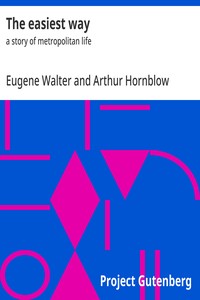
The novel opens with a panoramic description of Broadway at theatre-closing time, a torrent of humanity and traffic rendered in long, breathless sentences. This initial rush of language establishes a city that is both exhilarating and indifferent—a setting where characters are swept along. The narrative voice throughout alternates between this detached, almost journalistic observation and intimate, colloquial dialogue that reveals inner conflict. The shift is most pronounced in scenes between Laura and the theatrical agent Jim Weston, where the prose slows to accommodate their halting, emotionally charged exchanges.
The City as a Character in the Prose
The opening chapter's depiction of Broadway is not mere backdrop; the prose itself mimics the chaotic energy of the streets. Phrases like 'confused, bewildered mass of elbowing humanity' and 'resistless torrent' create a sense of overwhelming force. This language recurs when characters discuss their circumstances—Laura's life is described as a 'whirling vortex' from which she struggles to escape. The city's pace dictates the narrative's tempo: rapid, crowded paragraphs give way to quieter, more static scenes in boarding-house rooms. The contrast underscores the tension between public performance and private desperation.
Dialogue as a Window to Voice and Class
The dialogue between Laura and Weston reveals distinct speech patterns that mark their social positions. Weston's vernacular—'hell forty ways from the Jack,' 'I'm just a common, ordinary showman'—is earthy and direct, while Laura's responses are more measured, often trailing off into silence or tears. The authors use these vocal contrasts to highlight the gap between Weston's blunt pragmatism and Laura's fragile hope. When Weston says, 'I ain't blaming the women,' his grammar signals his background, yet his empathy is genuine. The dialogue's rhythm shifts from rapid-fire complaints to pauses filled with unspoken meaning, as when Laura 'averted her face' and wiped away tears.
Pacing Through Physical Detail and Gesture
The narrative slows markedly during moments of domestic routine. Laura's actions—pouring unused milk back into a bottle, replacing biscuits in a wardrobe, sewing a rip in her skirt—are described with deliberate care. These small gestures anchor the story in tangible reality, contrasting with the abstract pressures of her situation. The pace quickens again when Weston enters, his energy breaking the stillness. The authors use such shifts to mirror Laura's emotional state: stillness when she is alone with her thoughts, movement when others intrude. The final excerpt, where Laura crouches motionless on a trunk, brings the narrative to a halt, emphasizing a moment of paralysis.
Readers attentive to the novel's rhythm will notice how the authors use sentence length and dialogue density to signal shifts in power and mood. The Broadway crowds and the quiet boarding-house room are not just settings but structural devices that control the flow of information and emotion. Pay particular attention to the moments when the prose becomes sparse—these are often where the characters' true vulnerabilities surface.