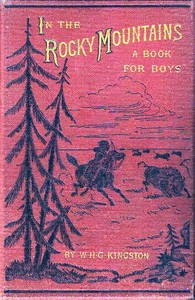
In the Rocky Mountains: A Tale of Adventure — Edition Insights
Edition facts
The first chapter of In the Rocky Mountains introduces a first-person narrator who immediately establishes the farm at Roaring Water as a place of tension. The arrival of Lieutenant Broadstreet and his troopers, followed by the sudden appearance of the wounded Redskin Winnemak, sets up a pattern of hospitality and obligation. Clarice and Rachel’s care for Winnemak, despite his initial threat, creates a debt that will be called upon later. The narrator’s voice is direct and observant, often noting details of setting and character with a practical eye.
A Narrator Rooted in Place and Family
The opening chapters reveal a narrator who is both participant and chronicler. He describes the farm’s situation—near a roaring waterfall—and its inhabitants: his sister Clarice, the servant Black Rachel, and Uncle Jeff. The family history in Chapter III, told as a flashback, explains how they came to the Rockies after losing their Ohio farm to fire and their mother to cholera. This backstory is delivered in a straightforward, almost reportorial tone, with the narrator recounting hardships without self-pity. The reader learns that the narrator’s father died on the journey, and that Uncle Jeff became the family’s protector. This grounding in personal loss makes the subsequent dangers feel earned rather than arbitrary.
Gratitude as a Narrative Engine
Winnemak’s gratitude for Clarice’s care is not merely a character trait but a plot mechanism. In Chapter II, he warns the farm of approaching enemies, and later, his daughter Maysotta becomes a guide and ally. The excerpts show that this gratitude is tested: when Lieutenant Broadstreet is captured by Winnemak’s own people, the chief orders his release upon recognizing him. The narrator’s anxiety about Clarice’s disappearance is heightened by the fact that the very people who owe them kindness may be involved. This reciprocal obligation—hospitality given, then returned—drives many of the story’s turning points, though the excerpts leave unclear whether all debts will be honored.
Captivity and Its Reversals
The later excerpt depicts a scene of prisoners—Arrapahas captured by Winnemak’s band—including a young squaw and, unexpectedly, Lieutenant Broadstreet. The narrator’s reaction mixes horror at the prospect of torture with a determination to plead for the captives. The language here shifts from adventure to moral commentary: “it shows how debased, how diabolically cruel, men can become when they have once gone away from God.” This explicit judgment is rare in the earlier excerpts, which tend to let action speak. The reversal—where the would-be rescuers become prisoners—creates a symmetry that the reader may watch for as the story unfolds.
The Role of Maysotta and Keokuk
Maysotta, Winnemak’s daughter, emerges as a capable figure in her own right. She appears with her dog Keokuk, who can lead people to a kill or to search for the missing. Her offer to go in search of Clarice if she does not arrive shows initiative that contrasts with the narrator’s helplessness. The dog is not merely a pet but a tool of survival, used to retrieve game and guide parties. Maysotta’s expression of astonishment when she sees Lieutenant Broadstreet captured hints at her divided loyalties. These details suggest that the story may rely on her resourcefulness as much as on the narrator’s bravery, though the excerpts do not reveal her ultimate role.
Readers approaching In the Rocky Mountains for the first time will find that the excerpts offer a clear map of its concerns: the weight of past loss, the currency of kindness, and the precariousness of safety on the frontier. The narrator’s voice is steady, but the events he describes are anything but. Pay attention to how debts of gratitude are collected and how captivity shifts between groups—these patterns may shape the story’s resolution more than any single battle or escape.