J
Jake Morrison
Guest
- Thread Author
- #1
Soil bags slumped in the corner, a trowel on the railing, nowhere to sit: that’s the classic small balcony garden. A balcony storage bench setup fixes all three. Here’s how to pick one, load it, and keep it dry.
I garden on a sunny rooftop terrace in zone 7a, mostly in 5- to 15-gallon containers. After 12 years helping renters grow food in tight spaces, I’ve seen every storage mistake. A few were mine.
Short Answer: A balcony storage bench hides soil bags, tools, and fertilizer inside a lidded seat. You get tidy corners and a place to sit with your coffee, all in a seat-sized footprint. It’s the easiest storage upgrade for a small balcony garden.
Short Answer: Measure your floor, railing clearance, and walkway before you shop. Then watch where rain, afternoon sun, and wind hit your balcony for a week. Those two checks decide the bench size, the lid style, and whether you need a sealed or just water-resistant build.
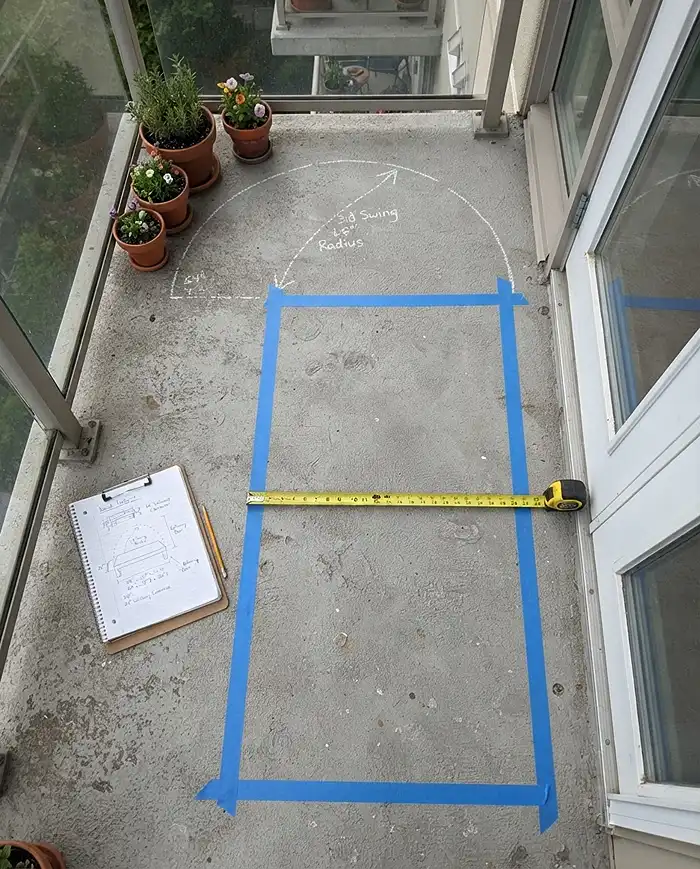
Short Answer: Leave at least 24 inches of walking clearance in front of the bench. Measure the lid’s full swing, too, so it opens without hitting the railing or a door. Mark the footprint with painter’s tape first, and live with the outline for two days.
Most balcony storage ideas fail right here. The bench looked perfect online, then blocked the door.
Short Answer: Driving rain on an open balcony calls for a fully sealed lid. A covered balcony can get by with a water-resistant finish. Strong UV fades cheap plastic and dries out wood. A sunny spot needs UV-stabilized [treated to resist sun damage] resin or oiled wood.
My terrace gets six hours of direct sun, so I’m picky. Penn State Extension’s guide to gardening in small spaces explains how light and temperature shape every choice you make.
Short Answer: Resin and HDPE are cheap, waterproof, and light. Teak, acacia, and cedar look warmer but cost more and need yearly care. Choose resin for wet, windy balconies and wood for sheltered ones. Pick based on your exposure, not a photo.
As of fall 2026, expect roughly $100 to $250 for resin and $300 or more for teak. If you’re still shopping, our balcony storage bench guide is a good starting point.
Short Answer: Resin and HDPE [a dense, tough plastic] benches are the most affordable fully waterproof choice. Many have tight lids that keep dry fertilizer from clumping. The tradeoff is looks, since most don’t match real wood. A textured finish hides scratches.
Short Answer: Natural woods bring warmth and rot resistance. Teak lasts longest, acacia costs less, and cedar smells wonderful. But they’re heavier and pricier, and they need annual sealing to prevent warping and cracking. Check your building’s weight limits before hauling one upstairs.
Short Answer: Divide the bench into zones. Put sealed soil bins on the bottom, hand-tool hooks on the lid, and heavy items evenly across the floor. This keeps everything clean, findable, and easy to grab mid-planting. Think of it as a tiny garden shed.
Need more room? These balcony garden storage ideas pair well with a bench.
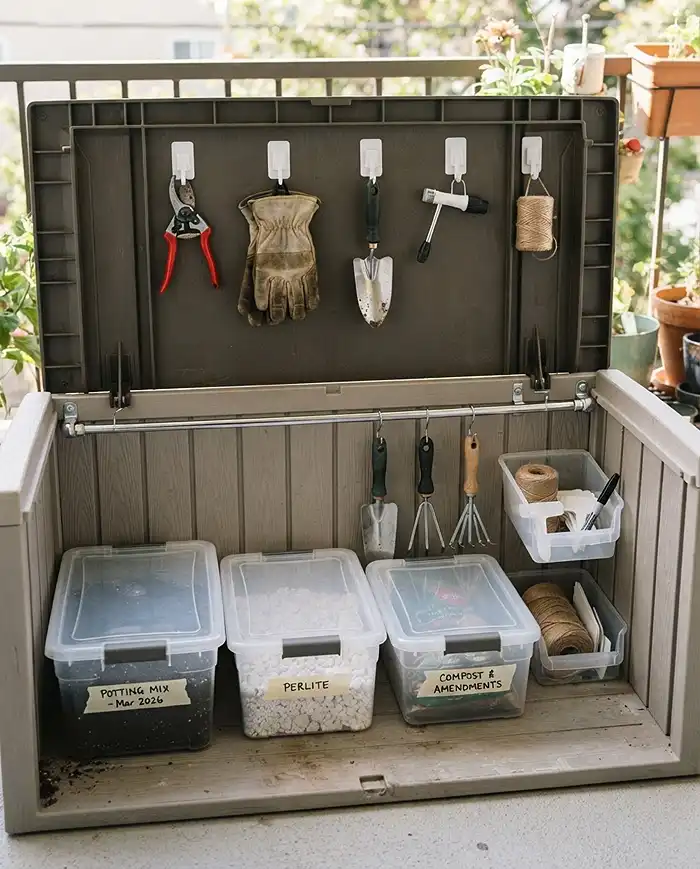
Short Answer: Move torn bags of potting soil, perlite, and smelly organic fertilizer into sealed clear totes. Lids stop spills and deter rodents, and clear sides show what’s left. Label each tote with a marker and the date you opened it. Stack them two high at most.
Short Answer: Stick adhesive hooks inside the lid or wedge a small tension rod across the wall space. Hang trowels, pruners, and gloves so they stay dry and out of the dirt. Use outdoor-rated adhesive and let it cure 24 hours before loading.
Short Answer: Spread heavy items evenly across the bench floor. A 50-quart bag of potting mix runs 20 to 35 pounds, and a full 2-gallon watering can adds about 17. Piling them in one corner bows the floor panel. Keep the heaviest items centered and low.
What Happened to Me: One May, I stacked six bags of mix on one side of my first bench for my ‘Glacier’ tomato pots. The floor sagged about an inch. I spread the load and added a 3/4-inch plywood board underneath. The sag stopped.
Short Answer: Style the bench like a deliberate piece of outdoor furniture. Add wipeable cushions, frame it with tall container plants, and keep the lid clear of clutter. A bench that looks planned feels like part of your small balcony garden, not a storage bin.
Short Answer: Choose UV-resistant, marine-grade outdoor cushions with solution-dyed fabric [color added before weaving, so it resists fading]. Soil smudges wipe off with a damp cloth. Look for quick-dry foam and ties or non-slip backing so the cushion stays put in wind.
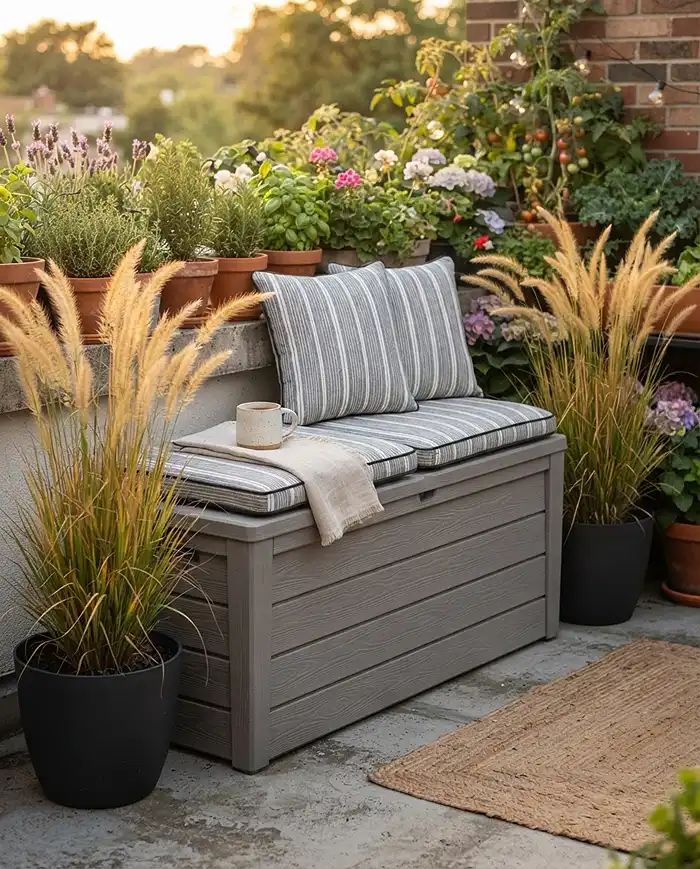
Short Answer: Frame the bench with tall, structural container plants like ornamental grasses or arborvitae. They soften hard edges, block wind, and hide the bench’s plain sides. Use 7- to 15-gallon pots so plants don’t tip, and keep them outside the lid’s swing.
One June, I set two ‘Karl Foerster’ feather reed grasses in 7-gallon pots on either side of my bench. By late August they stood about 3 feet tall and screened the whole bench from the street. They shrugged off our zone 7a winter.
Short on floor space? These balcony storage ideas for garden supplies use walls and railings instead.
Short Answer: Do two chores each year: empty freeze-sensitive supplies before winter, and clean and reseal the bench each spring. Those habits protect your fertilizer, tools, and the bench itself. Zone 7a nights can dip to 5°F, so I don’t gamble. Both chores take under an hour.
Short Answer: Remove liquid fertilizer, neem oil, and compost tea before the first hard freeze. Freezing bursts bottles and breaks down the formulas, so what’s left won’t work properly. Move them to a garage or closet that stays above freezing. I bring mine in around Halloween.
Short Answer: Every spring, scrub the bench, let it dry, sand lightly, and wipe on teak oil or boiled linseed oil. Pick a dry, mild day for it. This restores water repellency and slows cracking. Two thin coats beat one thick coat. Resin only needs a wipe-down.
Lay oily rags flat to dry. They can ignite on their own if bunched up.
Short Answer: The dark, enclosed space inside a bench invites mildew, musty smells, and spiders. Most problems come from trapped moisture, so fix airflow and dryness first. Then add a simple routine of airing out, wiping down, and a quick pest check each month.
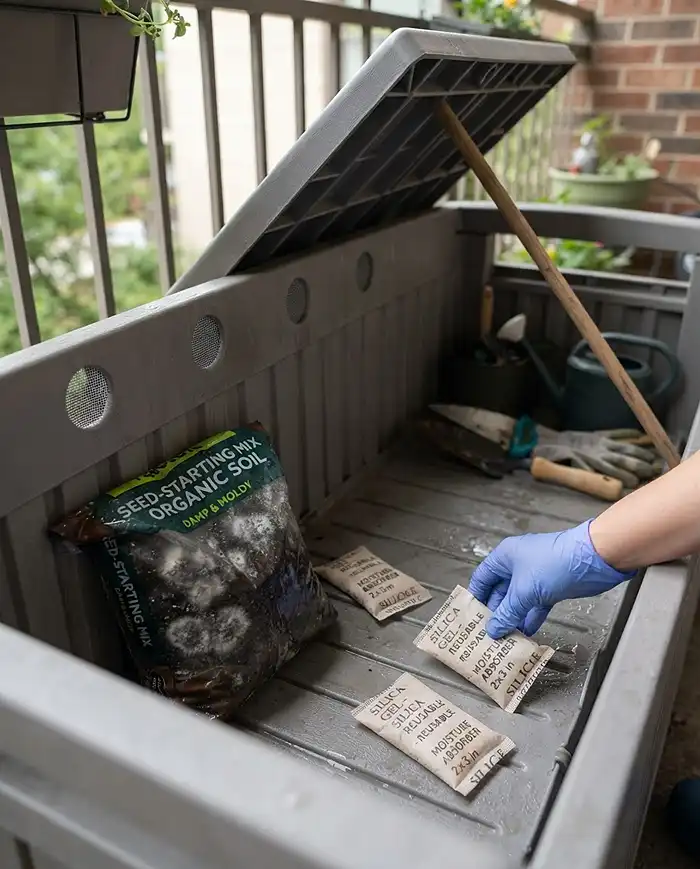
Short Answer: Wet tools and humid air cause mold inside a closed bench. Toss in reusable silica gel packets and drill a few small, shielded ventilation holes near the top rim. Dry tools before they go in, and prop the lid open for an hour after rain.
What Happened to Me: One March, I stored a damp bag of seed-starting mix in a cedar bench. By May, damping off [seedlings collapsing from fungal rot] killed 9 of 12 ‘Sungold’ tomato seedlings.
I reseeded in fresh mix and transplanted once soil hit 60°F. Ripe fruit came about 57 days later. Now every bag goes in a sealed tote with silica packs.
Short Answer: Clear cobwebs every month with a dry cloth, then lightly spray the inside corners with a diluted peppermint or neem oil mix. The scent repels spiders and insects without harsh chemicals. Reapply after heavy rain, and shake out gloves before you put them on.
Most quality resin benches are built as seating. Still, check the manufacturer’s weight capacity, which is usually 300 to 400 pounds, before seating multiple guests.
Avoid it. Wet soil sitting on a wooden floor panel invites rot and mildew. Put damp bags inside a secondary plastic bin first, or let them dry out before storing.
Keep a heavy bag of potting soil or a few bricks at the bottom of lightweight resin benches at all times. The extra weight anchors the bench against high balcony winds.
Look for a bench about 14 to 18 inches deep and 36 to 48 inches wide. That usually leaves the 24 inches of walking space you need on a narrow balcony.
A few small, shielded holes near the top rim help moisture escape and cut down on mildew. Drill them high so rain can’t blow in. If your bench is rated waterproof, silica gel packets are a gentler option.
Skip liquid fertilizers in winter, wet tools, and food scraps. Also keep gasoline, propane, and other flammables out, since a closed bench can trap heat and fumes.
I garden on a sunny rooftop terrace in zone 7a, mostly in 5- to 15-gallon containers. After 12 years helping renters grow food in tight spaces, I’ve seen every storage mistake. A few were mine.
Table of Contents
- The Dual-Purpose Power of a Balcony Storage Bench
- Assessing Your Balcony Space and Weather Exposure
- Choosing the Best Material for Outdoor Tool Storage
- Step-by-Step Guide to Organizing Garden Tools Inside
- Enhancing the Bench for Seating and Aesthetics
- Seasonal Maintenance and Winterizing Your Storage
- Common Problems & Solutions
- balcony storage bench Setup FAQs
- Quick Recap
The Dual-Purpose Power of a Balcony Storage Bench
Short Answer: A balcony storage bench hides soil bags, tools, and fertilizer inside a lidded seat. You get tidy corners and a place to sit with your coffee, all in a seat-sized footprint. It’s the easiest storage upgrade for a small balcony garden.
Assessing Your Balcony Space and Weather Exposure
Short Answer: Measure your floor, railing clearance, and walkway before you shop. Then watch where rain, afternoon sun, and wind hit your balcony for a week. Those two checks decide the bench size, the lid style, and whether you need a sealed or just water-resistant build.
Measuring for Fit and Traffic Flow
Short Answer: Leave at least 24 inches of walking clearance in front of the bench. Measure the lid’s full swing, too, so it opens without hitting the railing or a door. Mark the footprint with painter’s tape first, and live with the outline for two days.
Most balcony storage ideas fail right here. The bench looked perfect online, then blocked the door.
- Measure the width, depth, and height of your free floor space.
- Add the lid’s open height and swing arc.
- Subtract 24 inches for your walking path.
Evaluating Rain, Sun, and Wind Load
Short Answer: Driving rain on an open balcony calls for a fully sealed lid. A covered balcony can get by with a water-resistant finish. Strong UV fades cheap plastic and dries out wood. A sunny spot needs UV-stabilized [treated to resist sun damage] resin or oiled wood.
My terrace gets six hours of direct sun, so I’m picky. Penn State Extension’s guide to gardening in small spaces explains how light and temperature shape every choice you make.
Choosing the Best Material for Outdoor Tool Storage
Short Answer: Resin and HDPE are cheap, waterproof, and light. Teak, acacia, and cedar look warmer but cost more and need yearly care. Choose resin for wet, windy balconies and wood for sheltered ones. Pick based on your exposure, not a photo.
As of fall 2026, expect roughly $100 to $250 for resin and $300 or more for teak. If you’re still shopping, our balcony storage bench guide is a good starting point.
| Material | Typical Price (Fall 2026) | Upkeep | Weight | Best For |
|---|---|---|---|---|
| Resin / HDPE | $100 to $250 | Wipe clean | Light | Open, wet, windy balconies |
| Teak | $300 and up | Oil yearly | Heavy | Sheltered, style-focused spaces |
| Acacia | $150 to $350 | Seal yearly | Medium-heavy | Covered balconies |
| Cedar | $200 to $450 | Seal yearly | Medium | Covered, rustic looks |
Heavy-Duty Resin and High-Density Polyethylene (HDPE)
Short Answer: Resin and HDPE [a dense, tough plastic] benches are the most affordable fully waterproof choice. Many have tight lids that keep dry fertilizer from clumping. The tradeoff is looks, since most don’t match real wood. A textured finish hides scratches.
Weather-Resistant Woods (Teak, Acacia, and Cedar)
Short Answer: Natural woods bring warmth and rot resistance. Teak lasts longest, acacia costs less, and cedar smells wonderful. But they’re heavier and pricier, and they need annual sealing to prevent warping and cracking. Check your building’s weight limits before hauling one upstairs.
Step-by-Step Guide to Organizing Garden Tools Inside
Short Answer: Divide the bench into zones. Put sealed soil bins on the bottom, hand-tool hooks on the lid, and heavy items evenly across the floor. This keeps everything clean, findable, and easy to grab mid-planting. Think of it as a tiny garden shed.
Need more room? These balcony garden storage ideas pair well with a bench.
Using Clear Plastic Bins for Soils and Fertilizers
Short Answer: Move torn bags of potting soil, perlite, and smelly organic fertilizer into sealed clear totes. Lids stop spills and deter rodents, and clear sides show what’s left. Label each tote with a marker and the date you opened it. Stack them two high at most.
Installing Internal Hooks and Tension Rods for Hand Tools
Short Answer: Stick adhesive hooks inside the lid or wedge a small tension rod across the wall space. Hang trowels, pruners, and gloves so they stay dry and out of the dirt. Use outdoor-rated adhesive and let it cure 24 hours before loading.
- Hooks for pruners and gloves
- A tension rod for trowel and hand rake handles
- A small bin for twine, plant ties, and labels
Managing Heavy Items: Potting Mix and Watering Cans
Short Answer: Spread heavy items evenly across the bench floor. A 50-quart bag of potting mix runs 20 to 35 pounds, and a full 2-gallon watering can adds about 17. Piling them in one corner bows the floor panel. Keep the heaviest items centered and low.
What Happened to Me: One May, I stacked six bags of mix on one side of my first bench for my ‘Glacier’ tomato pots. The floor sagged about an inch. I spread the load and added a 3/4-inch plywood board underneath. The sag stopped.
Enhancing the Bench for Seating and Aesthetics
Short Answer: Style the bench like a deliberate piece of outdoor furniture. Add wipeable cushions, frame it with tall container plants, and keep the lid clear of clutter. A bench that looks planned feels like part of your small balcony garden, not a storage bin.
Selecting Waterproof Cushions and Textiles
Short Answer: Choose UV-resistant, marine-grade outdoor cushions with solution-dyed fabric [color added before weaving, so it resists fading]. Soil smudges wipe off with a damp cloth. Look for quick-dry foam and ties or non-slip backing so the cushion stays put in wind.
Flanking the Bench with Potted Plants
Short Answer: Frame the bench with tall, structural container plants like ornamental grasses or arborvitae. They soften hard edges, block wind, and hide the bench’s plain sides. Use 7- to 15-gallon pots so plants don’t tip, and keep them outside the lid’s swing.
One June, I set two ‘Karl Foerster’ feather reed grasses in 7-gallon pots on either side of my bench. By late August they stood about 3 feet tall and screened the whole bench from the street. They shrugged off our zone 7a winter.
Short on floor space? These balcony storage ideas for garden supplies use walls and railings instead.
Seasonal Maintenance and Winterizing Your Storage
Short Answer: Do two chores each year: empty freeze-sensitive supplies before winter, and clean and reseal the bench each spring. Those habits protect your fertilizer, tools, and the bench itself. Zone 7a nights can dip to 5°F, so I don’t gamble. Both chores take under an hour.
Protecting Liquid Fertilizers from Freezing
Short Answer: Remove liquid fertilizer, neem oil, and compost tea before the first hard freeze. Freezing bursts bottles and breaks down the formulas, so what’s left won’t work properly. Move them to a garage or closet that stays above freezing. I bring mine in around Halloween.
Cleaning and Sealing Wooden Benches Annually
Short Answer: Every spring, scrub the bench, let it dry, sand lightly, and wipe on teak oil or boiled linseed oil. Pick a dry, mild day for it. This restores water repellency and slows cracking. Two thin coats beat one thick coat. Resin only needs a wipe-down.
Lay oily rags flat to dry. They can ignite on their own if bunched up.
Common Problems & Solutions
Short Answer: The dark, enclosed space inside a bench invites mildew, musty smells, and spiders. Most problems come from trapped moisture, so fix airflow and dryness first. Then add a simple routine of airing out, wiping down, and a quick pest check each month.
Mildew and Musty Odors Building Up Inside
Short Answer: Wet tools and humid air cause mold inside a closed bench. Toss in reusable silica gel packets and drill a few small, shielded ventilation holes near the top rim. Dry tools before they go in, and prop the lid open for an hour after rain.
What Happened to Me: One March, I stored a damp bag of seed-starting mix in a cedar bench. By May, damping off [seedlings collapsing from fungal rot] killed 9 of 12 ‘Sungold’ tomato seedlings.
I reseeded in fresh mix and transplanted once soil hit 60°F. Ripe fruit came about 57 days later. Now every bag goes in a sealed tote with silica packs.
Spiders and Pests Nesting in the Dark Corners
Short Answer: Clear cobwebs every month with a dry cloth, then lightly spray the inside corners with a diluted peppermint or neem oil mix. The scent repels spiders and insects without harsh chemicals. Reapply after heavy rain, and shake out gloves before you put them on.
balcony storage bench Setup FAQs
Is a resin storage bench strong enough to sit on?
Most quality resin benches are built as seating. Still, check the manufacturer’s weight capacity, which is usually 300 to 400 pounds, before seating multiple guests.
Can I store bags of wet potting soil inside a wooden bench?
Avoid it. Wet soil sitting on a wooden floor panel invites rot and mildew. Put damp bags inside a secondary plastic bin first, or let them dry out before storing.
How do I keep my empty storage bench from blowing away in a storm?
Keep a heavy bag of potting soil or a few bricks at the bottom of lightweight resin benches at all times. The extra weight anchors the bench against high balcony winds.
What size balcony storage bench fits a small balcony?
Look for a bench about 14 to 18 inches deep and 36 to 48 inches wide. That usually leaves the 24 inches of walking space you need on a narrow balcony.
Should a balcony storage bench have vent holes?
A few small, shielded holes near the top rim help moisture escape and cut down on mildew. Drill them high so rain can’t blow in. If your bench is rated waterproof, silica gel packets are a gentler option.
What shouldn’t I store in a balcony storage bench?
Skip liquid fertilizers in winter, wet tools, and food scraps. Also keep gasoline, propane, and other flammables out, since a closed bench can trap heat and fumes.
Quick Recap
- Choose a balcony storage bench that leaves 24 inches of walking space and a lid that opens fully.
- Match the material to your exposure: sealed resin for wet spots, oiled wood for sheltered ones.
- Use sealed clear totes for soil and fertilizer, and hang hand tools on the lid.
- Spread heavy bags and full watering cans evenly across the floor.
- Empty liquid fertilizers before winter, and reseal wood every spring.